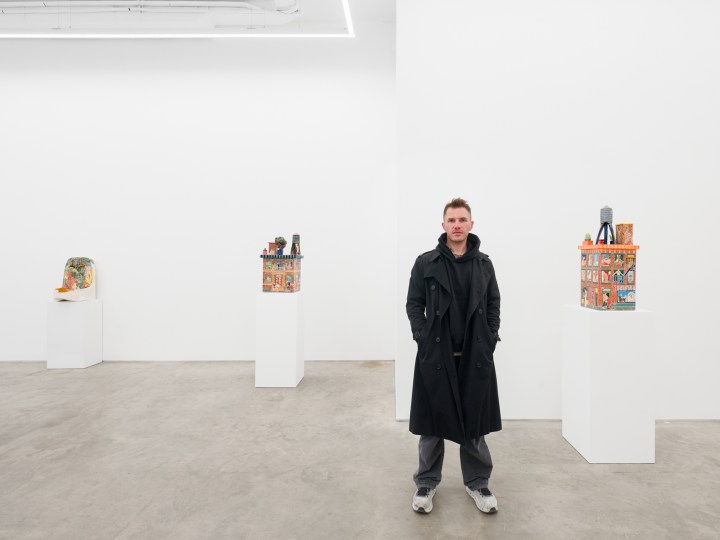
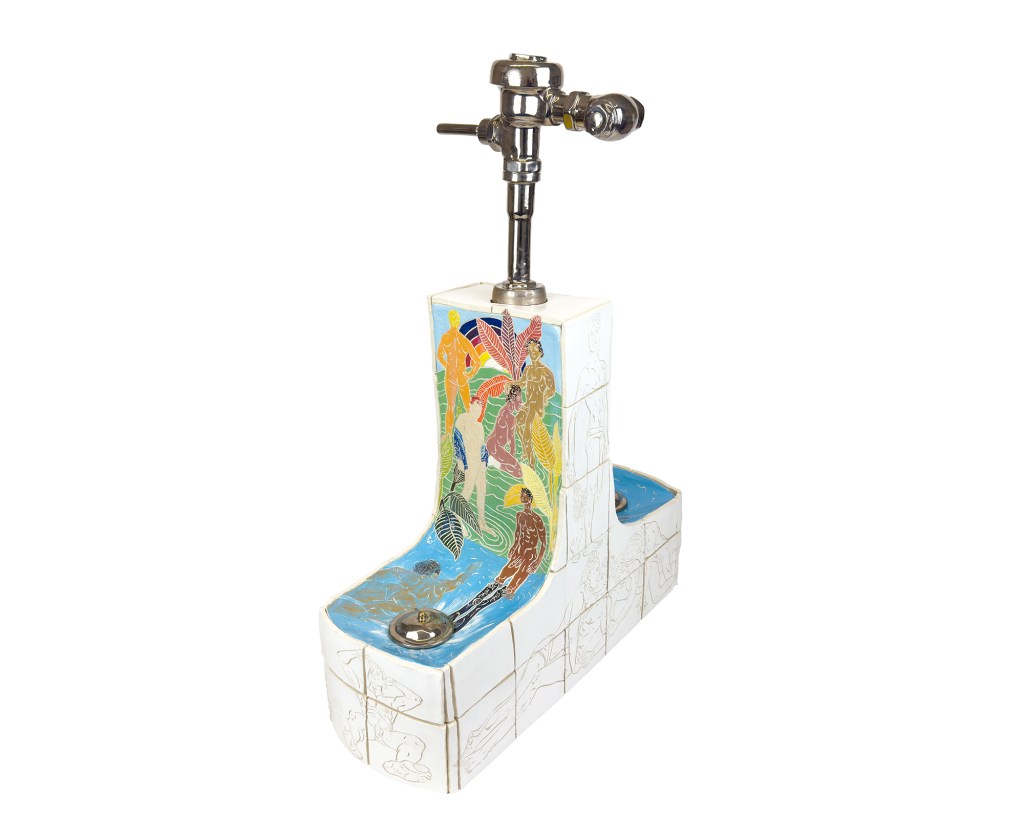
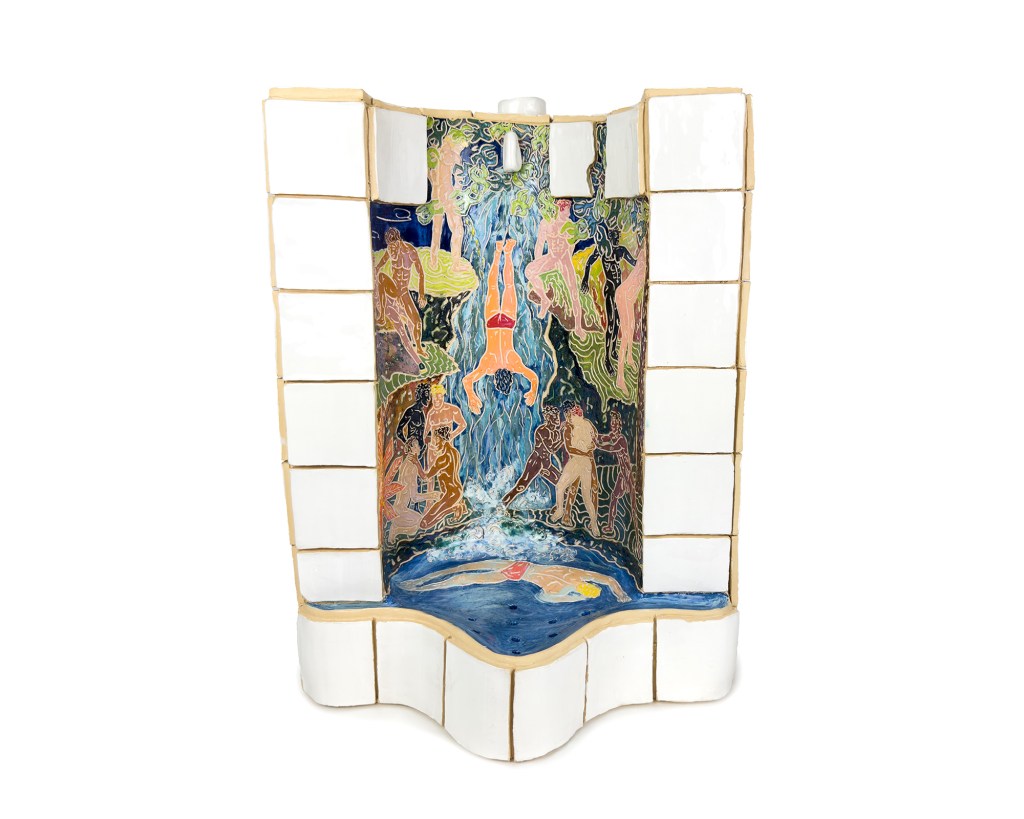
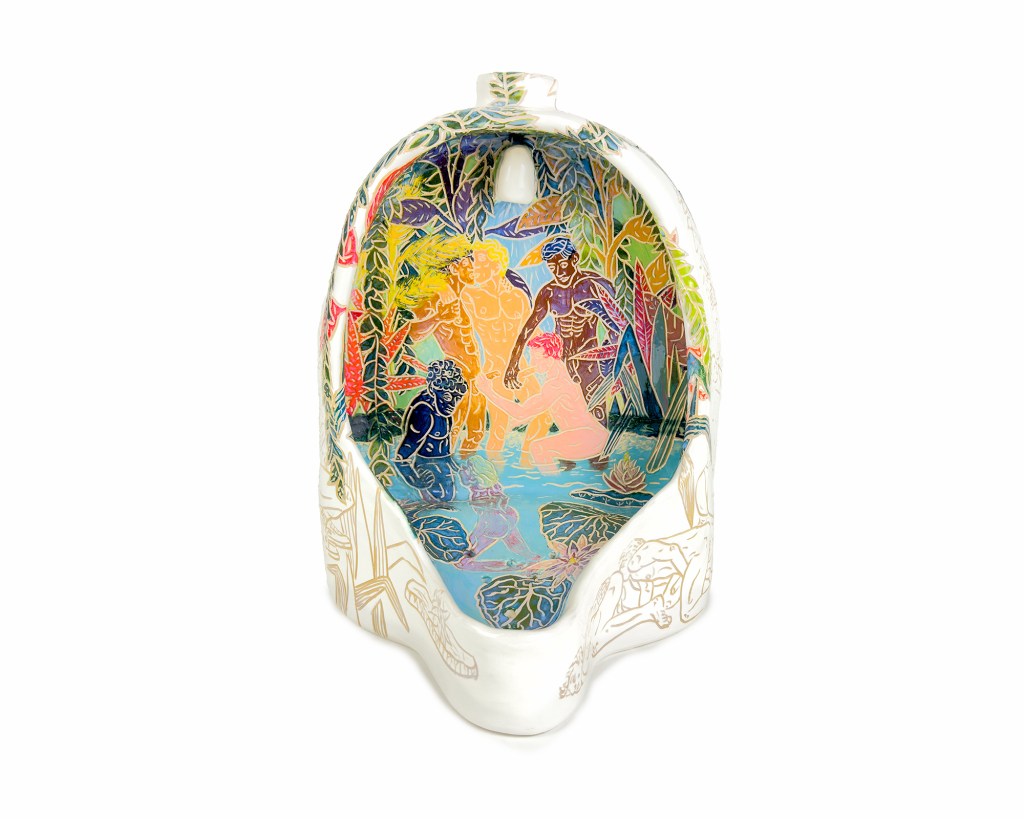
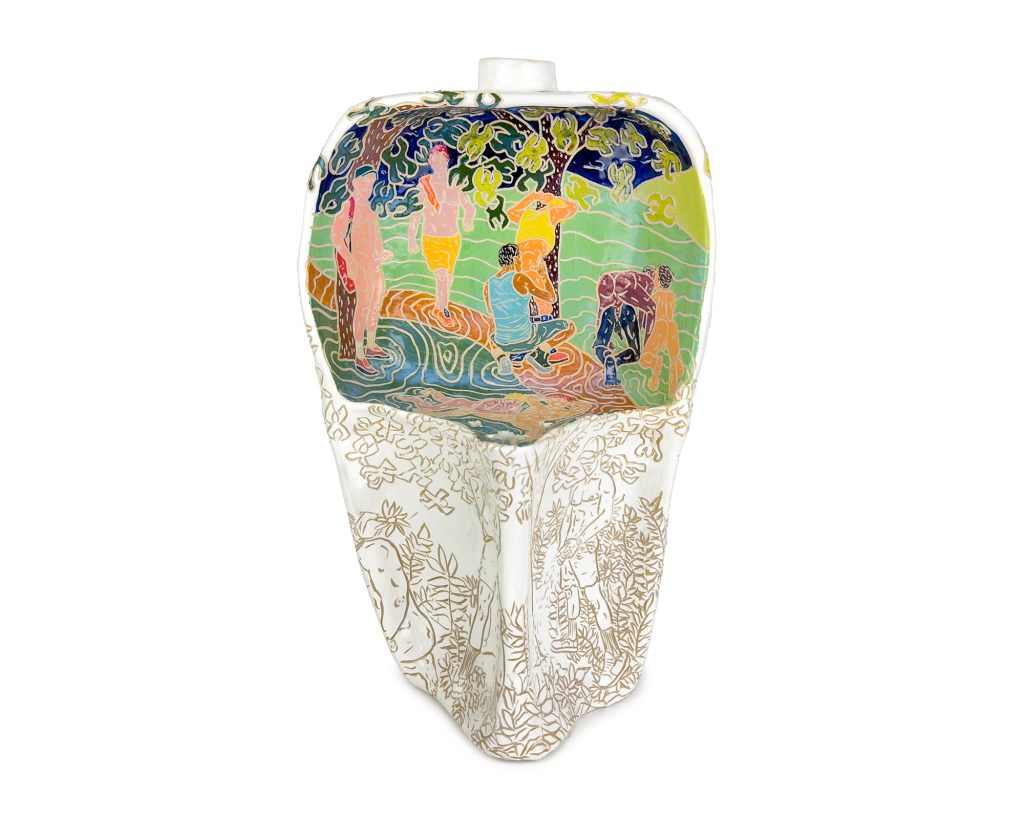
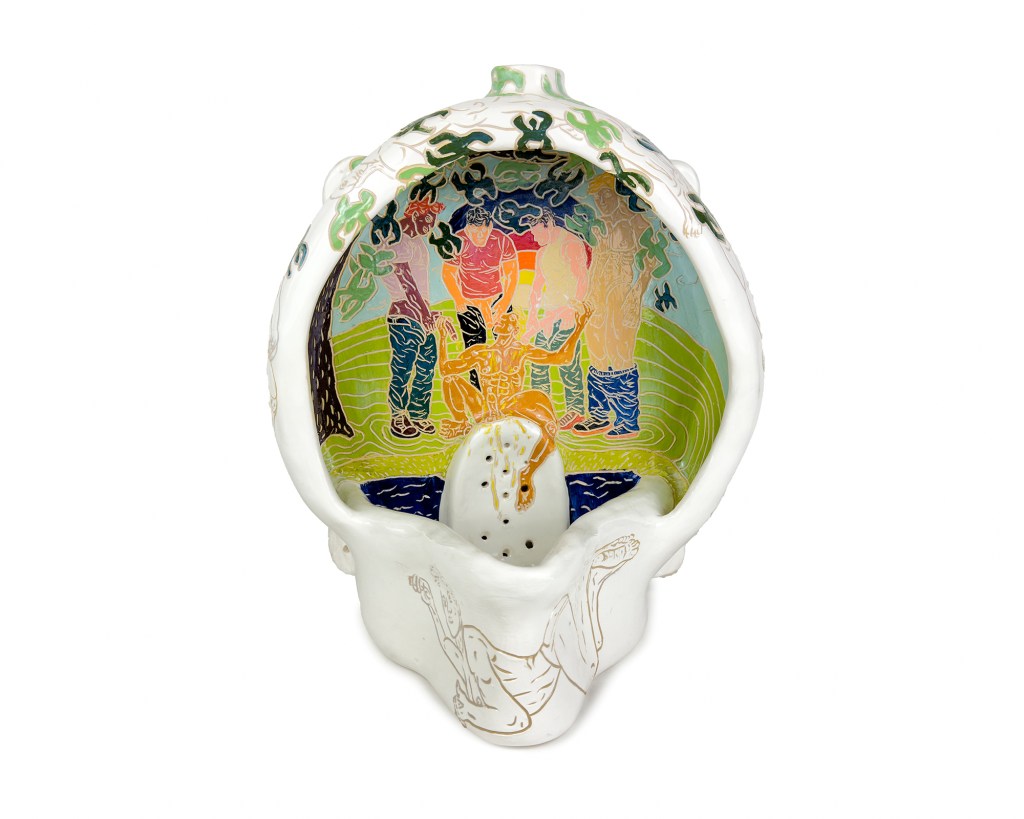
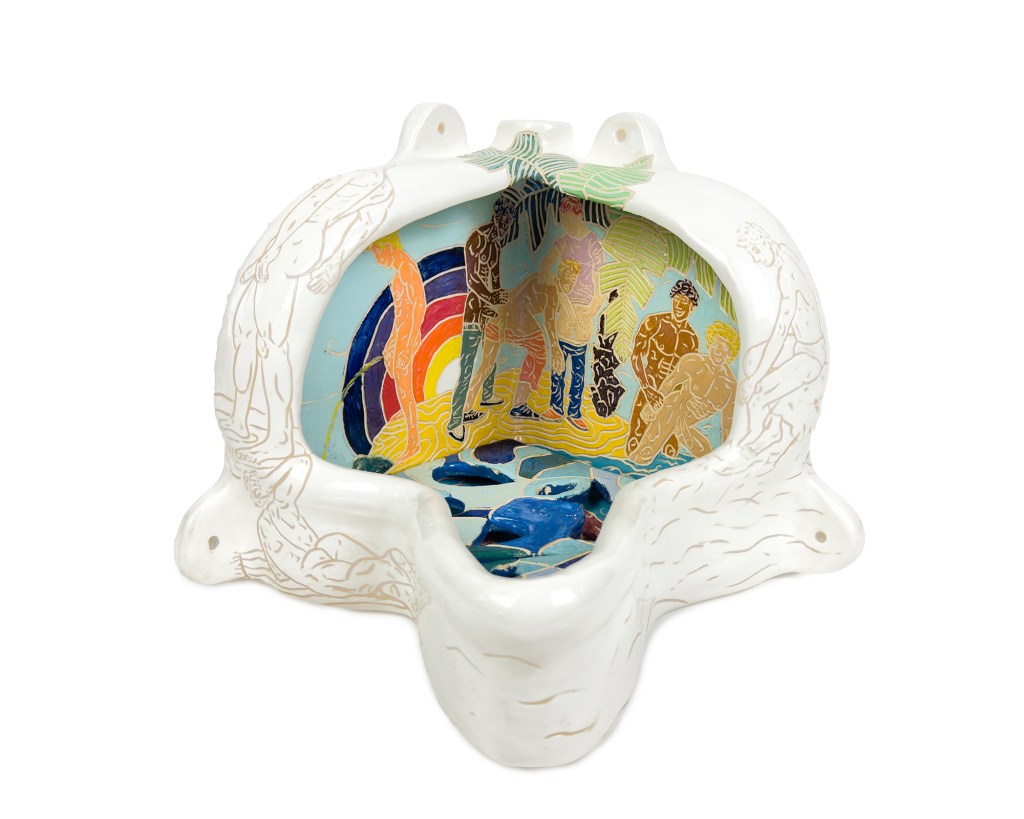
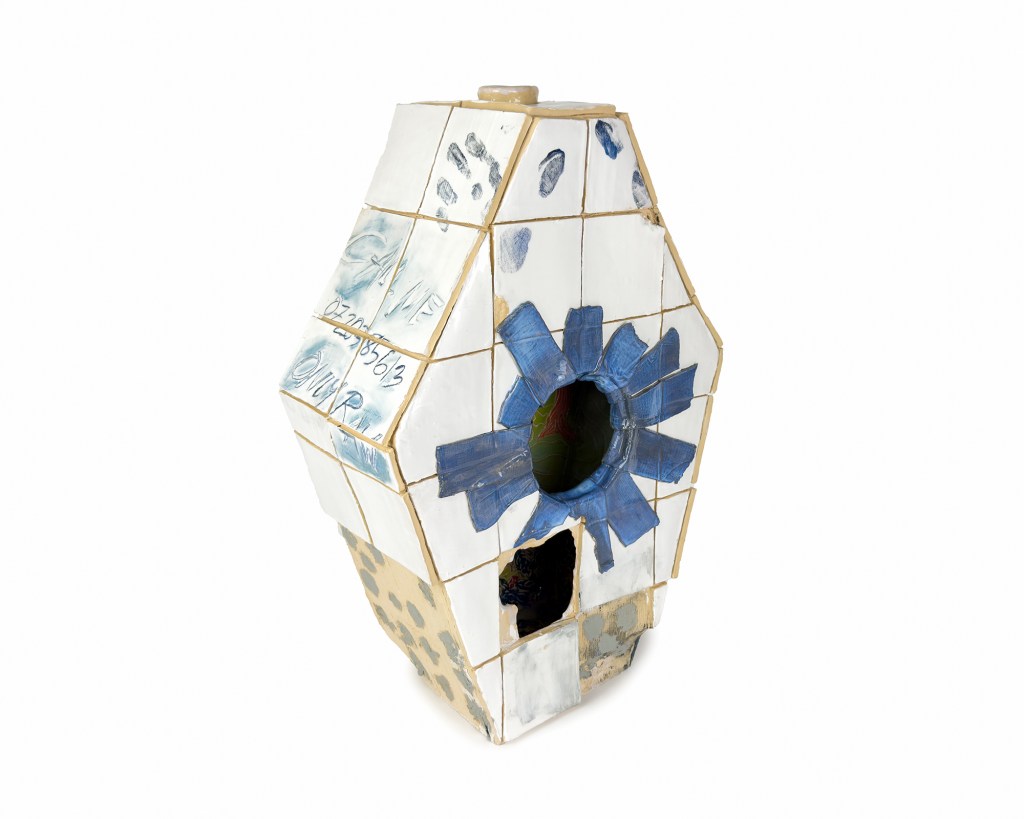
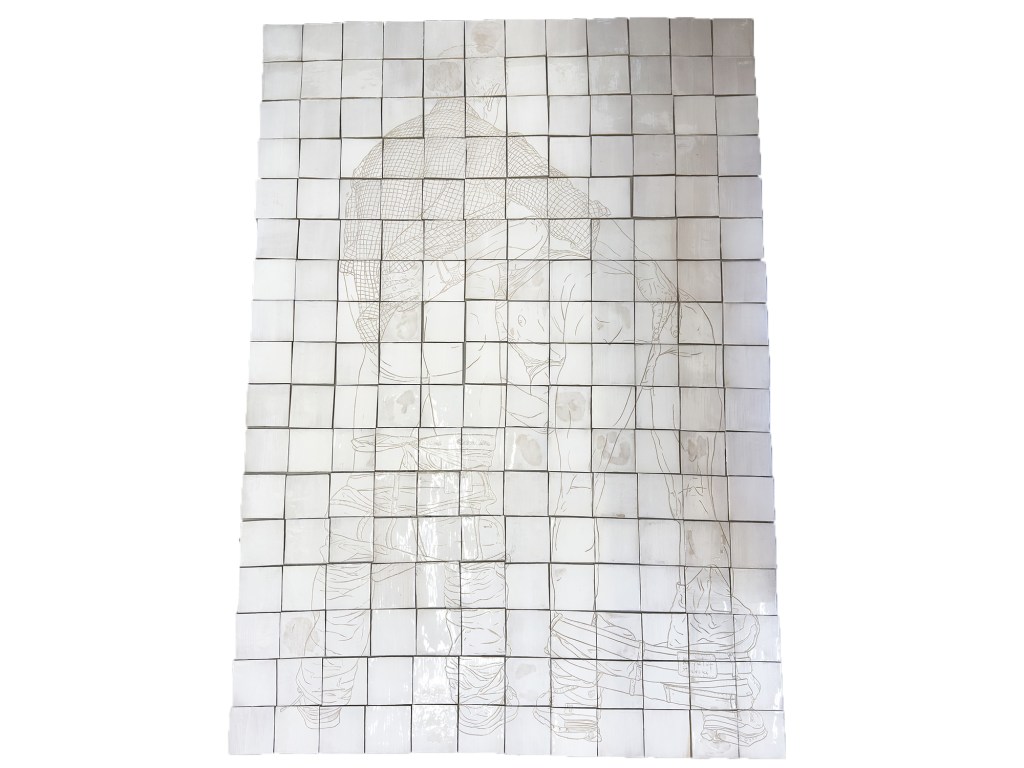
Krzysztof Strzelecki (b. 1993, Poland) continues his exploration of cruising fantasies, shifting the narrative from natural landscapes to public spaces. In RENDEZVOUS, he investigates the intersection of fetish and BDSM practices with urban architecture—focusing on the urinal as both a vessel, and a site of desire.
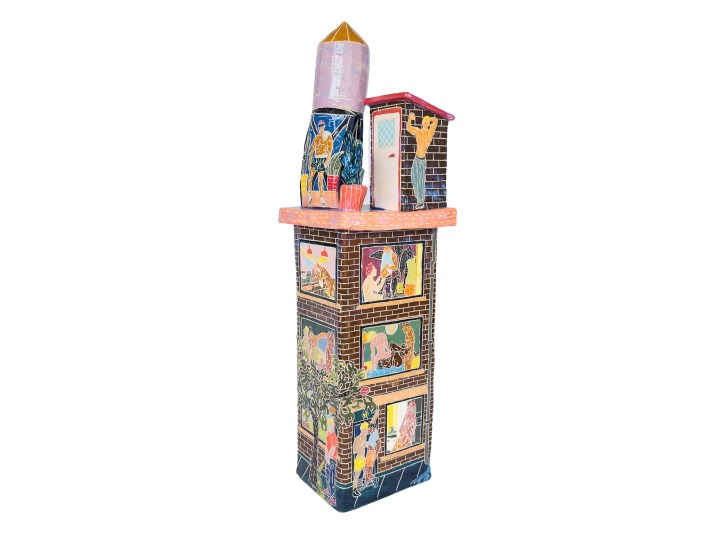
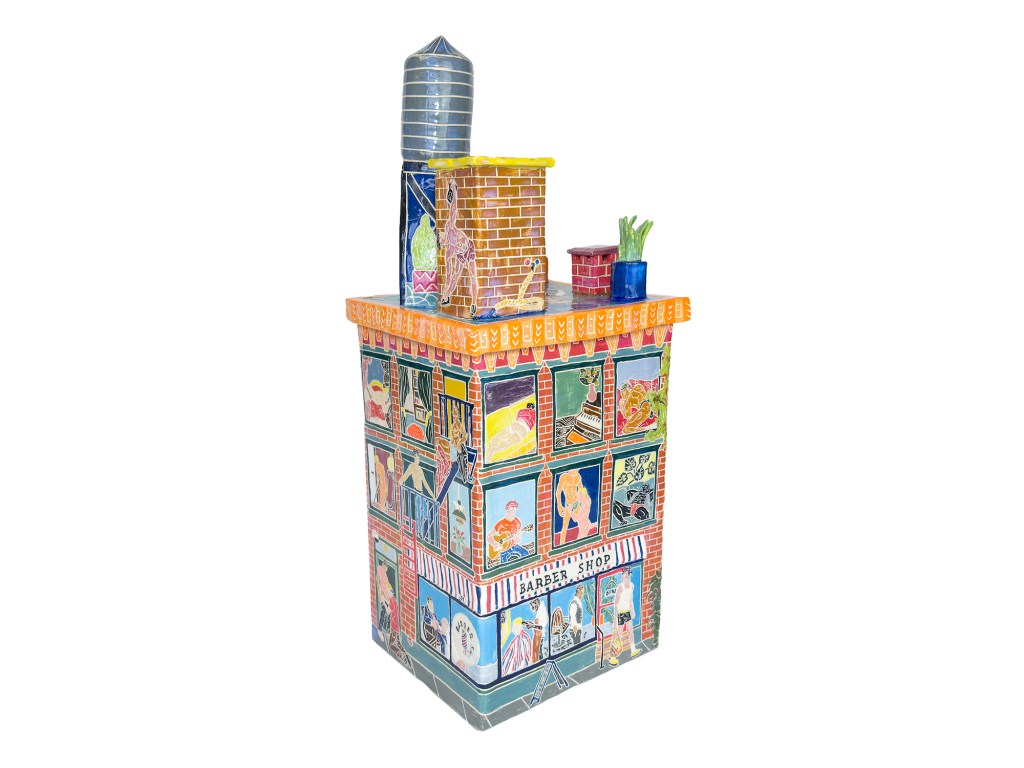
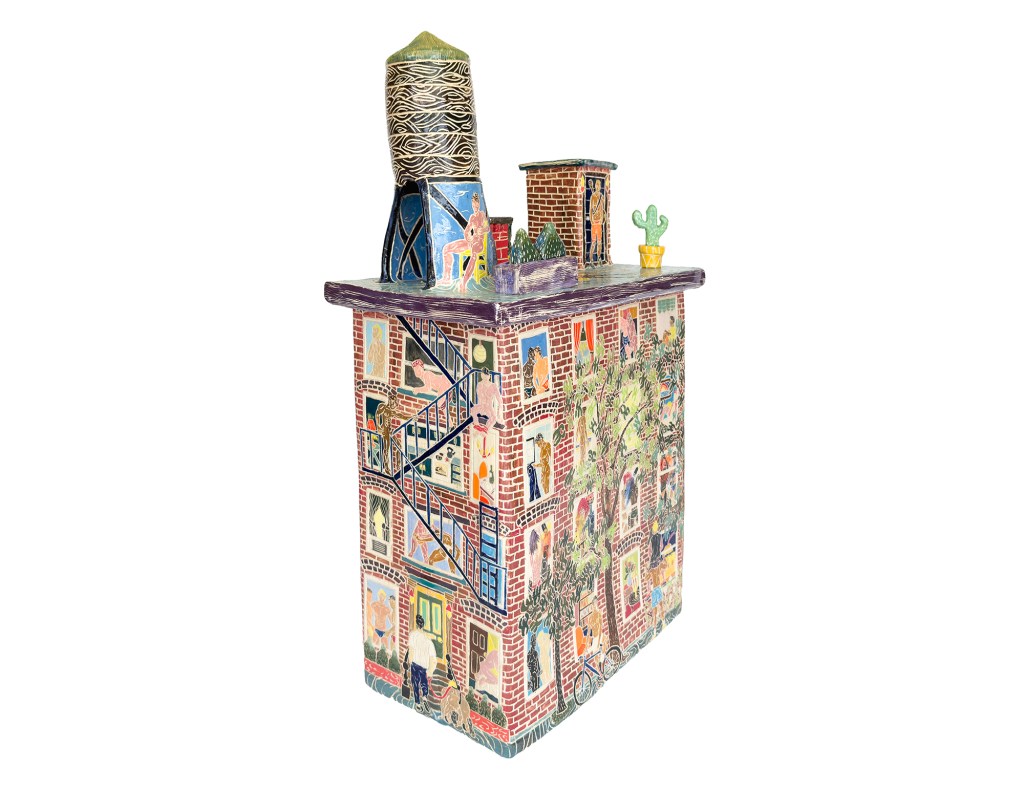
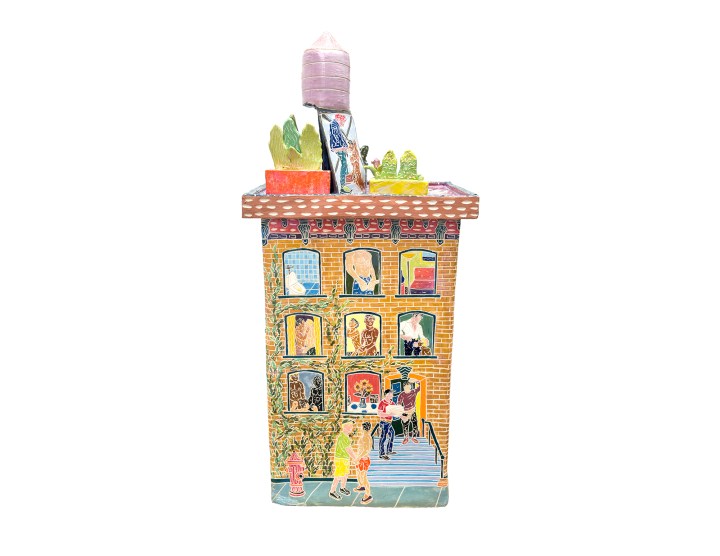
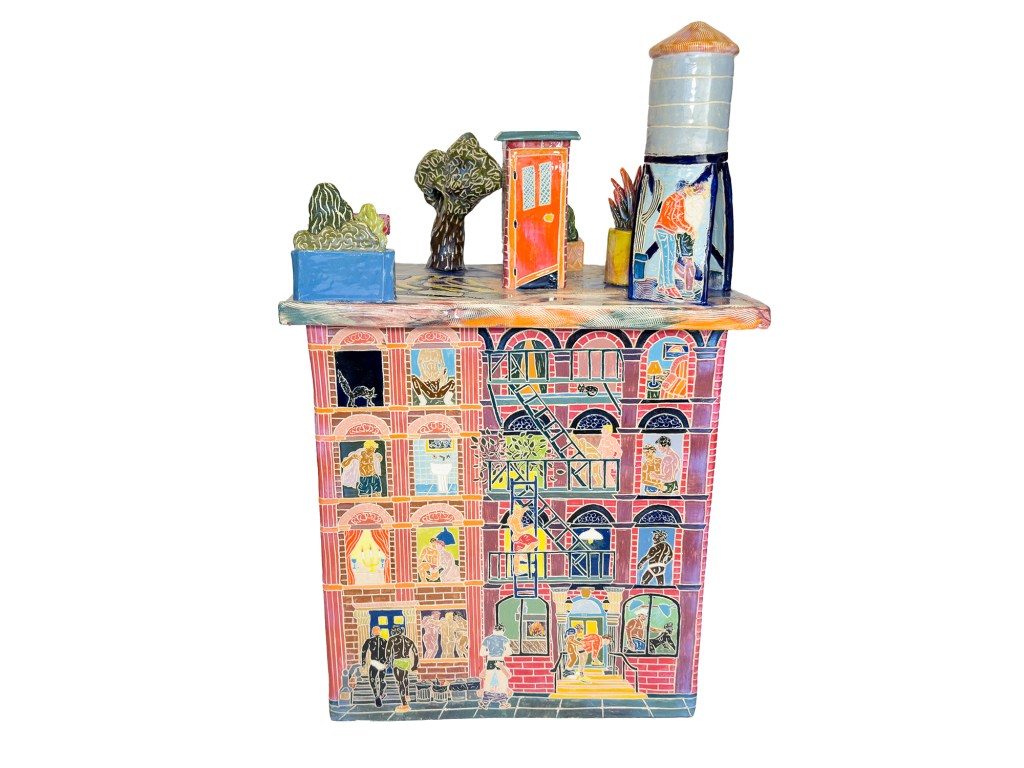
Strzelecki plays with language, using euphemisms like water sports, WS, golden shower to emphasize the coded ways in which particular fetishes manifest. His ceramic works depict historic New York buildings with scenes of life glimpsed through windows – this new work reflects how cruising has moved from public spaces into private interiors. This shift, accelerated by the rise of the internet and hook-up apps in the mid-1990s, has reshaped queer encounters—trading the risk and spontaneity of physical cruising for the controlled, digitalized intimacy of personal spaces. Yet, even in these private settings, the desire for secrecy, tension and transgression remains.
Work depicting parkland settings serves as a quiet reminder of cruising’s origins in nature, referencing the wooded areas and urban parks that have historically served as meeting places for anonymous encounters. Strzelecki suggests that, like buildings, nature is a space to be cared for and preserved—an extension of queer histories that exist beyond walls and structures.
Public restrooms, often unnoticed until urgently needed, are central to RENDEZVOUS. They exist in a liminal space—functional yet erotic, mundane yet transgressive. Their stark, white interiors—symbols of hygiene and order—contrast with the layered histories of secrecy and desire that play out within them. Strzelecki, after his first visit to New York City, became particularly attuned to the variations in restroom design between the USA and Europe. American stalls, with their high gaps at the top and bottom, allow for a voyeuristic awareness of others in the space, subtly exposing bodies and interactions. In contrast, European restroom doors, with lower gaps, create a different dynamic, shielding activity from outside view. The artist was also drawn to the bulky, metallic flush handles found in American restrooms—objects that demand physical interaction, unlike the motion sensitive, automated systems common in Europe. These mechanical fixtures, cold and industrial, take on an unexpected erotic charge, emphasizing the relationship between body, object, and ritual.
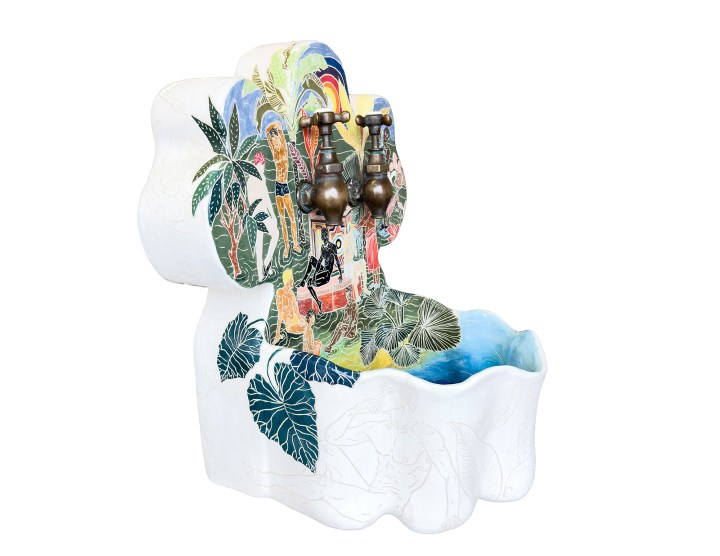
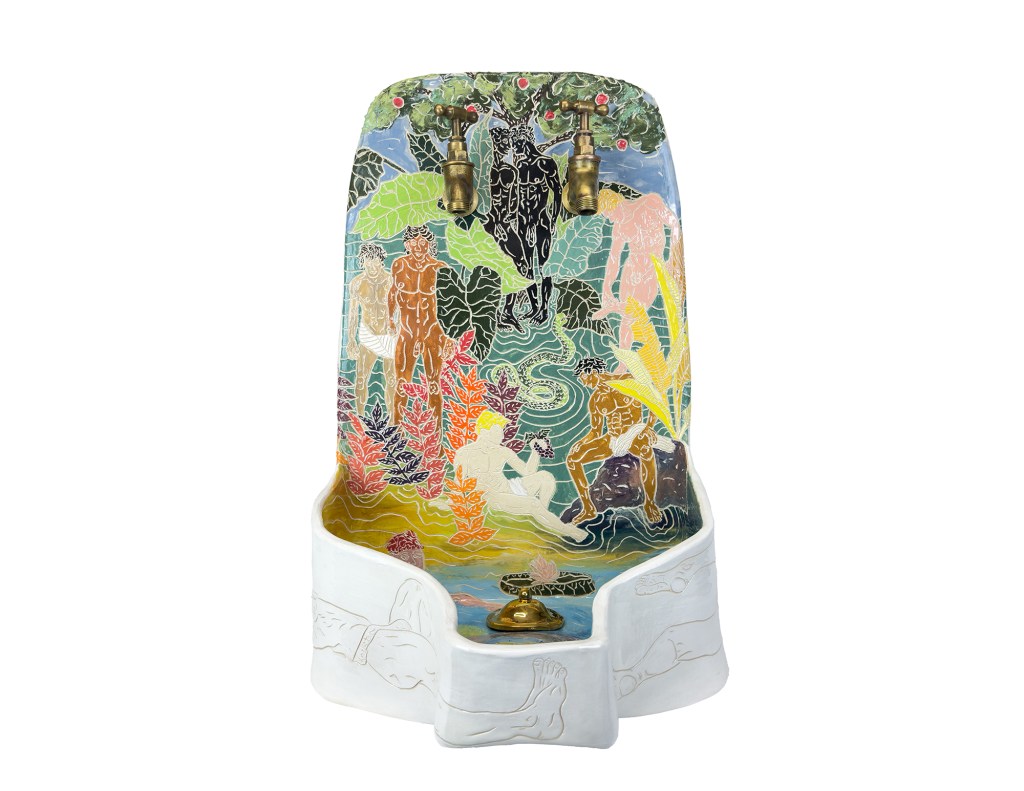
Strzelecki’s interest in coded queer spaces extends into his reinterpretation of ‘glory holes’—historically functional openings within restroom partitions that facilitate anonymous encounters. In his installation, visitors are encouraged to peer into these carved apertures, experiencing the tension of looking without knowing what lies beyond. His incorporation of auction-sourced antique brass taps, with their phallic forms, further blurs the boundaries between function and fetish, domesticity and desire.
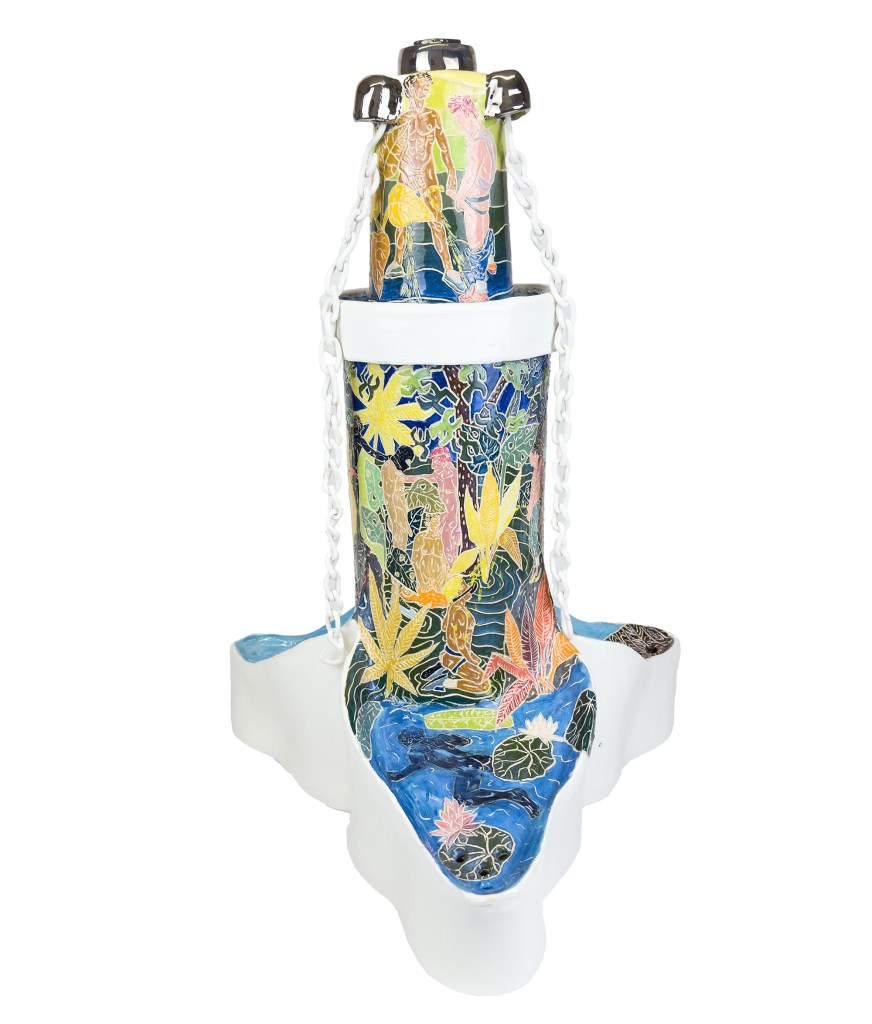
His research extends into New York’s nightlife, particularly clubs like The Eagle, where a chain-link fence divides the urinals. The fence serves as both a barrier and an invitation—allowing men to lock eyes but preventing direct touch, heightening the erotic tension between voyeurism, longing, and restraint. This division of space mirrors the themes throughout Public Rooms: the push and pull between concealment and exposure, distance and intimacy.
Strzelecki, who lives in London, also draws inspiration from Victorian and Edwardian-era urinals, integrating their decorative floral patterns into his ceramics. These ornamental motifs—once symbols of refinement and civility—become unexpected canvases for contemporary queer narratives, recontextualizing historical aesthetics within the framework of desire, secrecy and public intimacy. The floral elements recall an era when queerness was encoded in subtle gestures and symbols, much like the hidden dynamics of cruising itself.
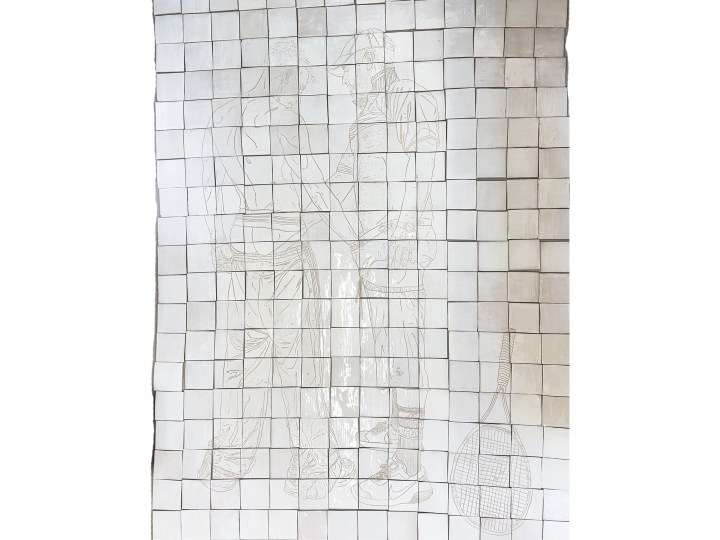
Upon entering the gallery, visitors encounter a tiled wall—its imagery unclear at first glance, slightly out of reach. Through a process of carving into porcelain-coated tiles, Strzelecki evokes a fleeting moment: the instant of stepping into a public restroom, sensing something illicit, catching a glimpse before looking away. A figure turns back to their urinal, the stall door closes, and everything appears as it should be—yet the tension lingers. The exhibition plays with the idea of being a participant or an observer, reinforcing the layered nature of queer desire and its expression in public spaces.
At the heart of the installation, Strzelecki’s fountain-like sinks evoke ritual cleansing, reinterpreting biblical themes through the lens of sexuality and taboo. Water, often associated with purification, here becomes both literal and symbolic—washing away evidence while anticipating future encounters. The act of urination, historically associated with humiliation and fetishism, is reimagined as both a private indulgence and a communal gesture, echoing the duality of shame and liberation that defines many queer spaces.
In RENDEZVOUS, Strzelecki continues to examine the tensions between visibility and secrecy, architecture and intimacy, function and fetish. By transforming the restroom into a site of layered meaning, he reclaims a space historically defined by exclusion and surveillance—turning it into a vessel for history, pleasure and self-expression.

 KS
KS 